Many people live for years with reflux symptoms—often with the feeling that medication improves acid-related discomfort, but does not truly address the underlying problem.
Many patients suffer from reflux symptoms for years—often despite medical treatment. It is not uncommon for patients to seek a solution that goes beyond simple acid suppression.
For more than three decades, the treatment of reflux disease has been a central focus of my surgical work.
I have treated numerous patients with different manifestations of reflux disease, managing them conservatively, medically, or surgically depending on the individual situation.
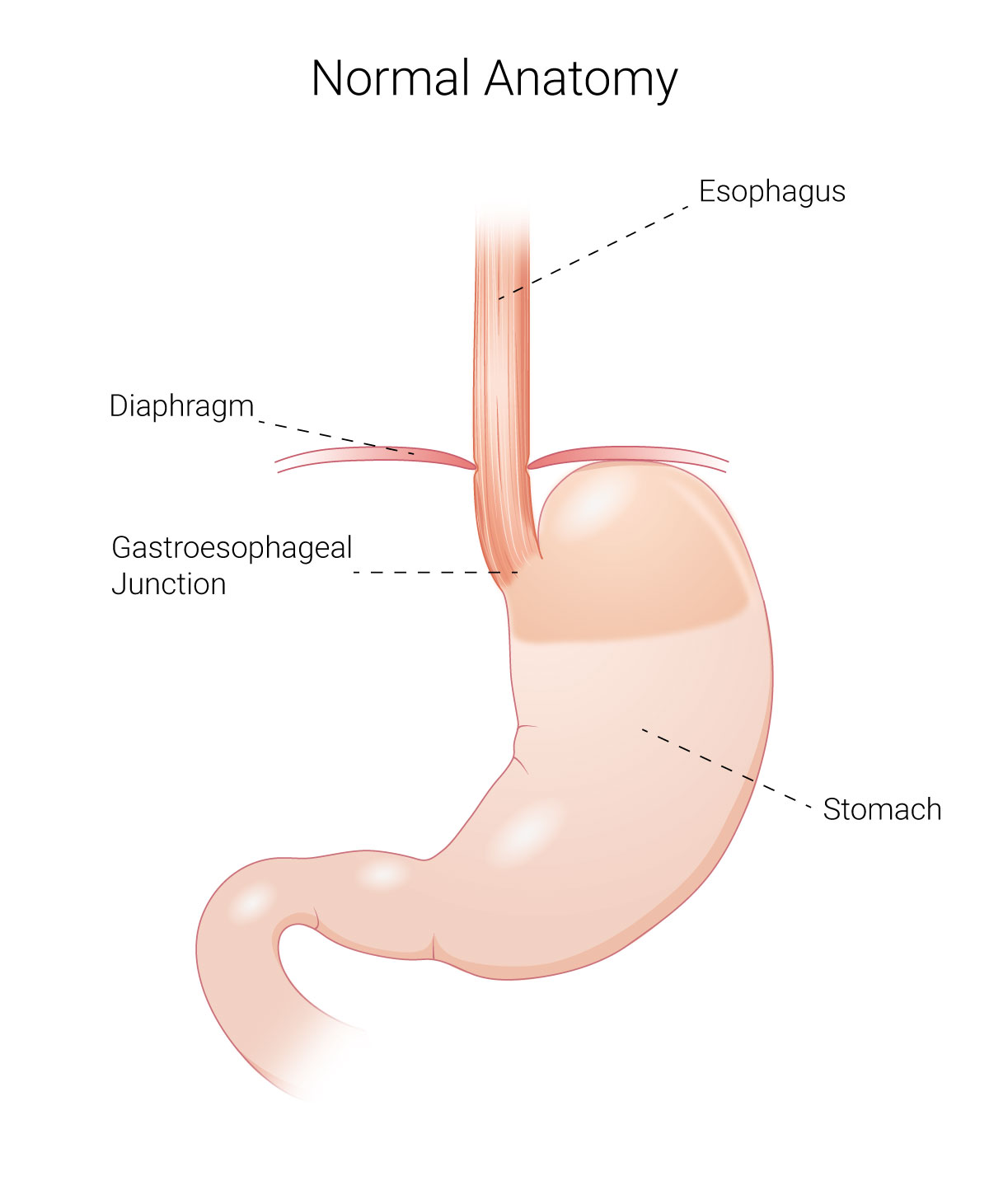
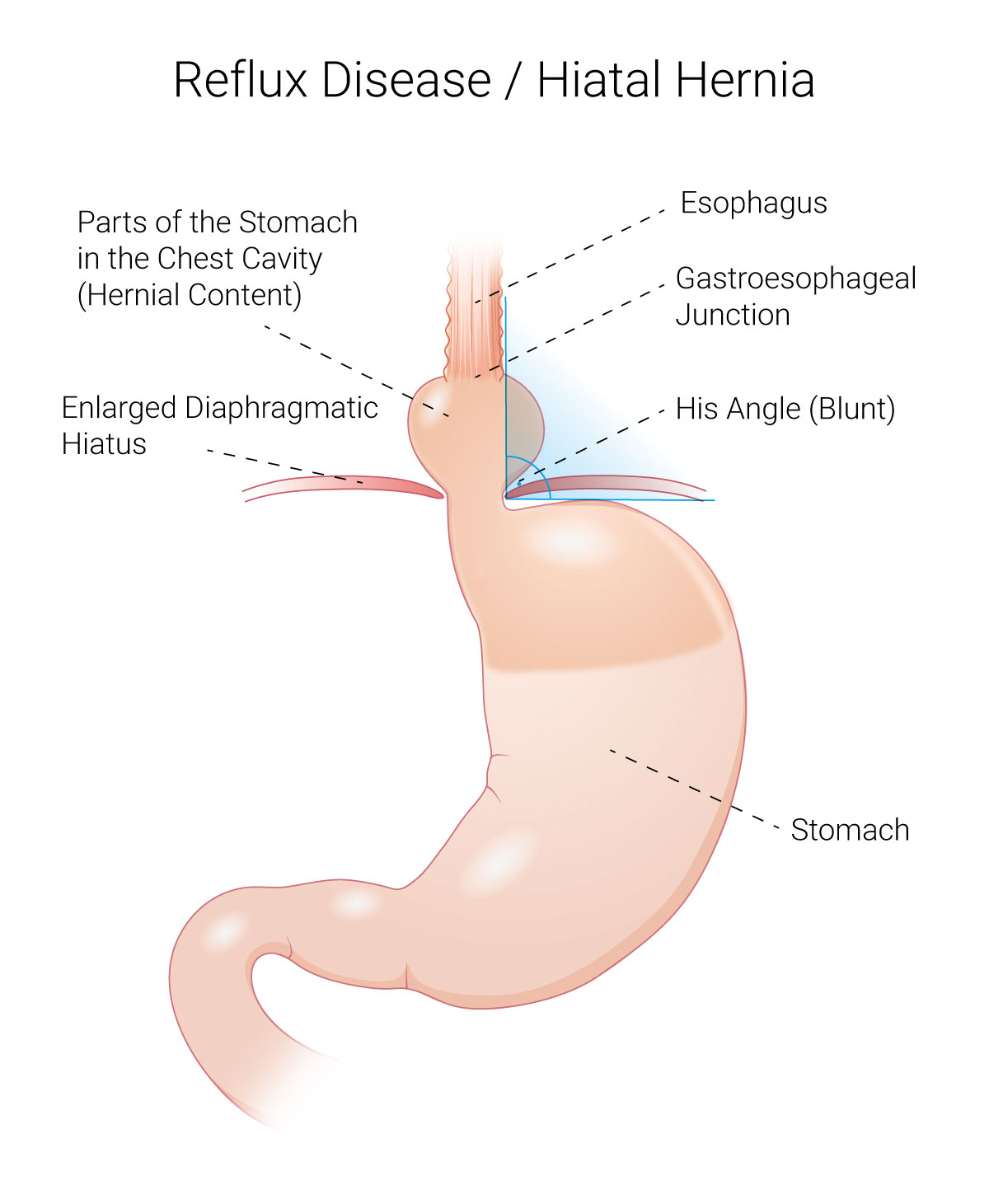
Reflux is not primarily caused by acid, but typically results from a weakness of the connective tissue at the junction between the esophagus and the stomach. If this area is not sufficiently stable, gastric contents—including stomach acid—can flow back into the esophagus, leading to symptoms and inflammatory changes.
The most commonly performed surgical procedures are still the various forms of fundoplication. In these procedures, the upper part of the stomach is wrapped around the lower end of the esophagus and fixed in place in order to mechanically prevent reflux. While this effectively controls pathological reflux, it does so at the cost of a significant alteration of the natural function of the gastroesophageal junction.
Many years of clinical experience, together with an in-depth study of the scientific literature, have fundamentally shaped my understanding of reflux disease.
On this basis, I have adopted and further developed the classical BICORN procedure. This led to the modified BICORN procedure—a reconstructive, function-oriented approach in which pathological reflux can be controlled long term in a manner comparable to fundoplication, while physiological functions—namely the ability to belch and to vomit—are generally preserved.
This website is intended to provide clear and understandable guidance and to serve as a basis for making informed diagnostic and therapeutic decisions.
Mischa Feigel, MD
.
Reflux Disease – Fundamentals
The mechanisms of reflux disease are well understood, although the exact causes are not fully clarified in every case. In the vast majority of patients, the condition is based on a mechanical weakness at the junction between the esophagus and the stomach, often associated with a hiatal hernia. As a result, gastric contents—including acid—can repeatedly reflux into the esophagus.
The lining of the esophagus is not adequately protected against this exposure. Persistent reflux may therefore lead to symptoms, inflammation, or long-term mucosal changes. In rare cases, this can result in a condition known as Barrett’s esophagus, which is associated with an increased risk of malignant transformation.
The goal of any treatment is to control this pathological reflux as effectively as possible.
Against this background, many patients are looking for treatment options that go beyond medication alone. Reasons include the desire to avoid lifelong dependence on proton pump inhibitors (acid-suppressing medication), as well as concerns about potential long-term side effects, such as effects on bone metabolism or the absorption of certain nutrients.
“Reflux disease is a mechanical problem. Acid-suppressing medications treat symptoms and inflammation, but do not correct the underlying cause.” — Mischa Feigel, MD
Over 30 years of experience in reflux surgery
Well over 1,000 reflux procedures performed
Numerous medical publications in the field of reflux surgery
Effective treatment addresses the underlying cause—not just the symptoms.
A thorough evaluation is the first step. Those who understand the cause can make the right decision.